 my ORCID
Helmut Schaschl, Dr. Priv. Doz. - Humangenetik / Human Genetics - Department of Evolutionary Anthropology
Short Curriculum Vitae
I am a human geneticist and evolutionary biologist. I work in the cross-sectional areas of human genomics, population genetics and evolutionary genetics. I received my habilitation (Venia Legendi) in human and evolutionary genetics in 2014. In my research, I use molecular genetic and genomic laboratory methods, bioinformatics, population genetics and evolutionary genetics to understand human genomic diversity and what this diversity tells us about human genetic evolutionary history, genetic adaptation and phenotypic traits. In addition, I want to understand the immunogenetic diversity that exists in natural populations and how this diversity relates to disease resistance and fitness.
Ich bin Humangenetiker und Evolutionsbiologe. Ich arbeite in den Querschnittsbereichen Humangenomik, Populationsgenetik und Evolutionsgenetik. Meine Habilitation (Venia Legendi) in Human- und Evolutionsgenetik erhielt ich 2014. In meiner Forschung verwende ich molekulargenetische und genomische Labormethoden, Bioinformatik, Populationsgenetik und Evolutionsgenetik, um die genomische Vielfalt des Menschen zu verstehen und zu ergründen, was diese Vielfalt über die genetische Evolutionsgeschichte des Menschen, genetische Anpassungen und phänotypische Merkmale aussagt. Darüber hinaus möchte ich die immungenetische Vielfalt in natürlichen Populationen verstehen und wie diese Vielfalt mit Krankheitsresistenz und Fitness zusammenhängt.
Selection of papers
Schaschl H, Goellner T, Morris DL (2022). Positive selection acts on regulatory genetic variants in populations of European ancestry that affect ALDH2 gene expression. Scientific Reports, 12:4563. https://www.nature.com/articles/s41598-022-08588-0 .
Göllner T, Larena M, Kutanan W, Lukas H, Fieder M, Schaschl H (2022). Unveiling the Genetic History of the Maniq, a primary hunter-gatherer society. Genome Biology and Evolution; doi: 10.1093/gbe/evac021. https://academic.oup.com/gbe/advance-article/doi/10.1093/gbe/evac021/6526392?login=false .
Emser SV, Schaschl H, Millesi E, Steinborn R (2021). Extension of Mitogenome Enrichment Based on Single Long-Range PCR: mtDNAs and Putative Mitochondrial-Derived Peptides of Five Rodent Hibernators. Frontiers in Genetics, 12, 2434. https://www.frontiersin.org/article/10.3389/fgene.2021.685806 .
Victoria Oberreiter V, Goellner T, Morris DL, Schaschl H (2021). Positive Selection Affects the Expression of Systemic Lupus Erythematosus Associated Loci in Human Populations. https://www.researchsquare.com/article/rs-255082/v1 .
Stefanovic M, Dusko C, Bogdanovic N, Kanuer F, Heltai M, Szabo L, Lanszki J, Zhelev CD. Schaschl H, Suchentrunk F. (2021). Positive selection on the MHC class II DLA-DQA1 gene in golden jackals (Canis aureus) from their recent expansion range in Europe and its effect on their body mass index. BMC Ecol Evo (2021). https://bmcecolevol.biomedcentral.com/articles/10.1186/s12862-021-01856-z .
Kiakos K, Satam V, Patil PC, Sweers J, Bowerman JM, Tzou S, Olsen K, Lee M, Schaschl H et al. (2021). Effects of N-terminus modified Hx-amides on DNA binding affinity, sequence specificity, cellular uptake, and gene expression. Bioorg Med Chem Lett. 2021 May 28;128158. doi: 10.1016/j.bmcl.2021.128158. https://www.sciencedirect.com/science/article/pii/S0960894X21003851?via%3Dihub .
Awadi A, Ben Slimen H, Schaschl H, Knauer F, Suchentrunk F (2021). Positive Selection on Two Mitochondrial Coding Genes and Adaptation Signals in Hares (Genus Lepus) from China. BMC Ecol Evo (2021) 21:100. https://bmcecolevol.biomedcentral.com/articles/10.1186/s12862-021-01832-7 .
Schaschl H & Wallner B (2020). Population-specific, recent positive directional selection suggests adaptation of human male reproductive genes to different environmental conditions. BMC Evol Biol 20, 27 (2020). https://doi.org/10.1186/s12862-019-1575-0 .
Wallner B, Windhager S, Schaschl H et al. (2019). Sexual Attractiveness: a Comparative Approach to Morphological, Behavioral and Neurophysiological Aspects of Sexual Signaling in Women and Nonhuman Primate Females. Adaptive Human Behavior and Physiology, 5:164186. https://doi.org/10.1007/s40750-019-00111-6 .
Ben Slimen H, Schaschl H, Knauer F, Suchentrunk F (2017). Selection on the mitochondrial ATP synthase 6 and the NADH dehydrogenase 2 genes in hares (Lepus capensis L., 1758) from a steep ecological gradient in North Africa. BMC Evol Biol. 2017 Feb 7;17(1):46. https://doi.org/10.1186/s12862-017-0896-0 .
Schaschl H, Huber S,Windhager S, Schaefer K, Wallner B, Fieder M (2015). Signatures of positive selection in the cis-regulatory sequences of the human oxytocin receptor (OXTR) and arginine vasopressin receptor 1a (AVPR1A) genes. BMC Evol Biol. 2015 May 13;15:85. https://doi.org/10.1186/s12862-015-0372-7 .
Windhager S, Schaschl H, Schaefer K, Mitteroecker P, Huber S, Wallner B, Fieder M (2014). Variation at Genes Influencing Facial Morphology Are Not Associated with Developmental Imprecision in Human Faces. Plos ONE; 9(6):e99009. http://journals.plos.org/plosone/article?id=10.1371/journal.pone.0099009 .
Rütgen BC, Gerner W, Beiglböck C, Schaschl H, Saalmüller A, Suchentrunk F, Essler SE. (2014). Exploratory assessment of CD4+ T lymphocytes in brown hares (Lepus europeus) using a cross-reactive anti-rabbit CD4 antibody. Vet Immunol Immunopathol. 161(1-2):108-15. doi: 10.1016/j.vetimm.2014.06.001. https://pubmed.ncbi.nlm.nih.gov/25042071/ .
Mueller M, Barros P, Witherden AS, Roberts AL, Zhang Z, Schaschl H, Yu CY, Hurles ME, Schaffner C, Floto RA, Game L, Steinberg KM, Wilson R, Eichler EE, Cook TH, Vyse TJ, Aitman TJ (2013). Genomic pathology of SLE-associated copy number variation at the FCGR2C/3B/2B locus. The American Journal of Human Genetics 92, 2840.
http://www.ncbi.nlm.nih.gov/pmc/articles/PMC3542466/ .
Schaschl H, Suchentrunk F, Morris DL, Ben Slimen H, Smith S, Arnold W (2012). Sex-specific selection for MHC variability in Alpine chamois. BMC Evol Biol 15;12:20. https://bmcecolevol.biomedcentral.com/articles/10.1186/1471-2148-12-20 .
Smith S, Goüy de Bellocq J, Suchentrunk F, Schaschl H (2011). Evolutionary genetics of MHC class II beta genes in the brown hare, Lepus europaeus. Immunogenetics;63(11):743-51. https://pubmed.ncbi.nlm.nih.gov/21688061/ .
Matthews B , Harmon LJ, M'Gonigle L, Marchinko KB, Schaschl H (2010) Sympatric and allopatric divergence of MHC genes in threespine stickleback. PLoS One 16;5(6):e10948. https://pubmed.ncbi.nlm.nih.gov/20585386/ .
Smith S , Mang T, Goüy De Bellocq J, Schaschl H, Zeitlhofer C, Hackländer K, Suchentrunk F (2010). Homozygosity at a class II MHC locus depresses female reproductive ability in European brown hares. Mol Ecol;19(19):4131-43. https://pubmed.ncbi.nlm.nih.gov/20731776/ .
Schaschl H, Aitman TJ, Vyse TJ (2009) Copy number variation in the human genome and its implication in autoimmunity. Clin Exp Immunol. Apr;156(1):12-6. https://pubmed.ncbi.nlm.nih.gov/19220326/ .
Howarth, K., Ranta, S., Winter, E. A Teixeira, H. Schaschl et al. (2009). A mitotic recombination map proximal to the APC locus on chromosome 5q and assessment of influences on colorectal cancer risk. BMC Med Genet 10, 54. https://bmcmedgenet.biomedcentral.com/articles/10.1186/1471-2350-10-54 .
Awards and distinction
Bernd Rode Award Laureate 2022 - ASEAN-European Academic University Network https://asea-uninet.org/scholarships-grants/bra-laureates-2022/ .
Research Funding
Evolutionary population genomics of hunter-gatherers in Indonesia: The Forest Tobelo and Orang Rimbo people 2022-10 to 2023-12 | Grant ASEAN-European Academic University Network (ASEA-UNINET), Austrian Federal Ministry of Education, Science and Research (Vienna, AT)
Investigating of the immunogenetic diversity of the Maniq 2022-10 to 2023-12 | Grant ASEAN-European Academic University Network (ASEA-UNINET), Austrian Federal Ministry of Education, Science and Research (Vienna, AT)
Unveiling the genetic history of the Maniq, primary hunter-gatherers in Southeast Asia 2019-10 to 2020-10 | Grant ASEAN-European Academic University Network (ASEA-UNINET), Austrian Federal Ministry of Education, Science and Research (Vienna, AT)
Horizuon Europe grant number 847693, 2020 - 2025; EU funding 1.765.440 EUR Co-project leader; project title: REinforcing Women In REsearch (REWIRE): https://rewire.univie.ac.at/ .
EU-FP7, grant number: 609431, 2013 - 2018; EU funding 1.539.605 EUR project leader; together with Amy Radlberger, Lucas Zinner; project title: INDICAR: Interdisciplinary Cancer Research: http://indicar.univie.ac.at/fellows .
Austrian Sciences Fund (FWF) Research Grant (2007-2010); grant number: P18534; FWF funding: 303,000 EUR, together with Dr. Franz Suchentrunk from the Veterinary Medicine University Vienna; project title: MHC genes and endoparasites in brown hares, Lepus europaeus: a model for understanding the meaning and consequences of immunogenetic diversity for individual fitness in wild living mammals.
Current Research Interests
In my research, I use molecular genetic laboratory methods, human genomics methods, bioinformatics, population genetics, and evolutionary genetics to understand human genomic diversity and what this diversity reveals about human evolutionary genetic history, genetic adaptation, and phenotypic traits. Furthermore, I am interested in understanding what immunogenetic diversity exists in natural populations and how this diversity is related to disease resistance and fitness.
Current Research Topics
-- Human population genetics, natural selection, genetic adaptation
-- Immunogenetics of natural populations
-- Population genetics and complex human traits
-- Population and evolutionary genetic history of hunter-gatherers in Southeast Asia
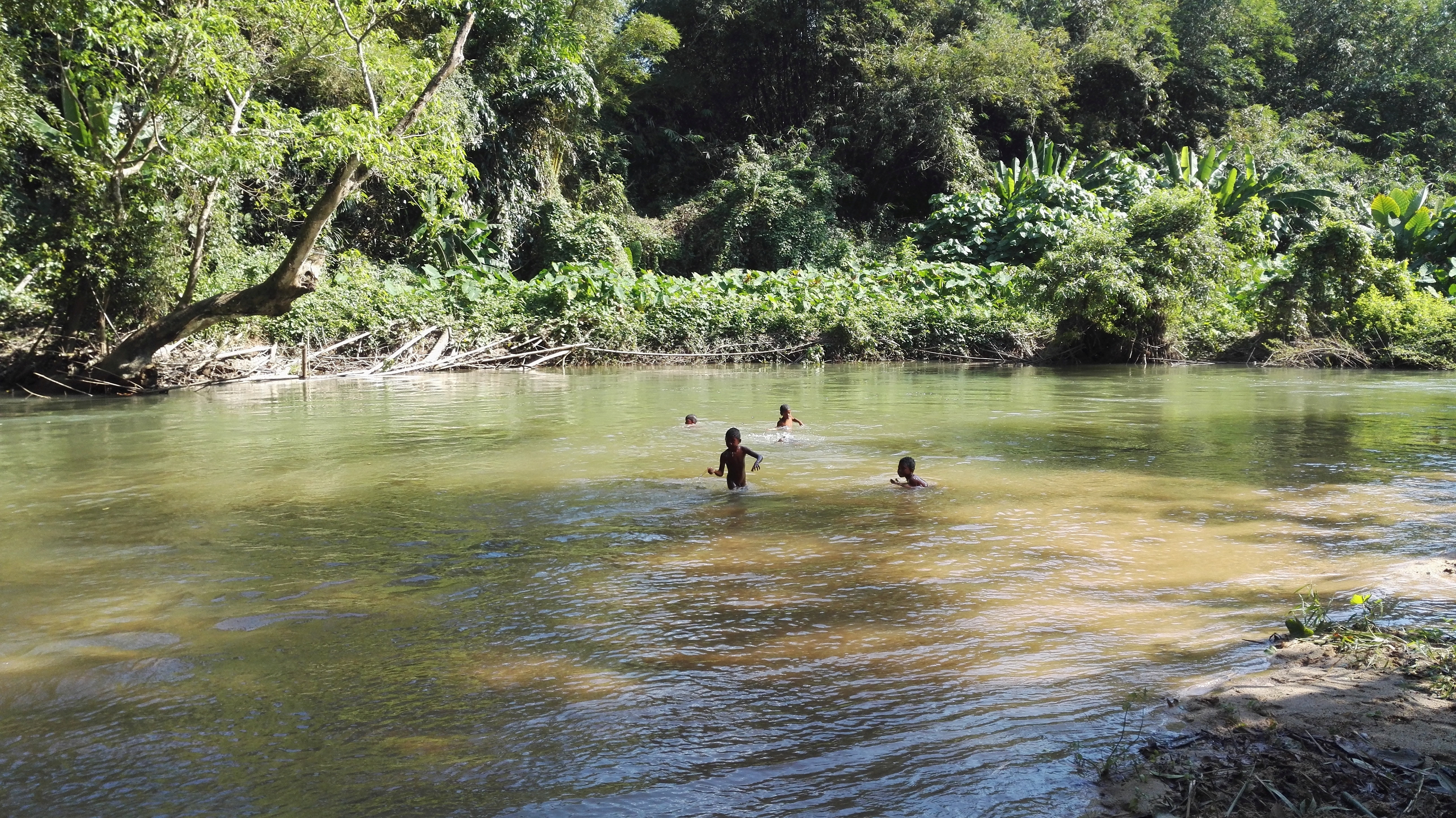
Field research 2019/2023 in southern Thailand (Satun/Trang provinces) to work on evolutionary genetics questions with the Maniq people (co-funded by ASEA-uninet)
Helmut Schaschl, Tobias Goellner, Helmut Lukas (Institute of Social and Cultural Anthropology), Fabian Wieshofer and Khaled Hakami.
Together with our Thai academic partners, we are studying the genetics of the Maniq people, one of the few remaining primary, nomadic hunter-gatherer societies of our time living in the rainforest of southern Thailand. We also want to identify genes that are subject to positive selection. We want to understand the differences in the extent of natural selection pressures between hunter-gatherer populations and populations that have transitioned to an agrarian/modern lifestyle (i.e. the majority of industrialized societies). See our recent paper: Goellner et al. (2022). Unveiling the Genetic History of the Maniq, a primary hunter-gatherer society. Genome Biology and Evolution; https://academic.oup.com/gbe/advance-article/doi/10.1093/gbe/evac021/6526392?login=false) .
We hope that our findings will also help to understand their rich evolutionary and cultural history in order to preserve their cultural integrity and the lifestyle they wish to maintain. Ultimately, we also hope that the rainforest in Thailand will be conserved to preserve the Maniq's precious habitat, the rainforest, for them and for all of us.
Last Foragers Standing - The Daily Life of the Maniq (by Helmut Lukas & Khaled Hakami): https://www.youtube.com/watch?v=kurBRRiXQ-Y&feature=youtu.be . We are very grateful to the wonderful Maniq people for their interest and participation in our scientific work.
Memberships
Genetics Society UK
Teaching
https://ufind.univie.ac.at/ .
PhD projects:
Tobias Göllner: The Peopling of Asia: genetic ancestry, population structure, demography and natural selection.
Master Thesis projects:
Richard Hahn: Optimization of non-invasive sampling, DNA/RNA isolation and characterization of the genetic polymorphisms in stress-related genes of Japanese Macaques (Macaca fuscata). Completed 2022.
Victoria Oberreiter: Population genetics of autoimmune diseases: Identifying pathways under natural selection in Rheumatoid Arthritis (RA) and Systemic Lupus Erythematosus (SLE). Completed 2020.
Ana Jelicic: An evolutionary perspective on three psychiatric disorders: major depressive disorder, bipolar disorder, and attention-deficit/hyperactivity disorder. Completed 2019 .
Johannes Gelmann: The impact of the expression of MAOA gene and HLA polymorphism in human pair bond. Completed 2017. othes.univie.ac.at/48382/ .