|
Last update: February 5, 2020 |
|
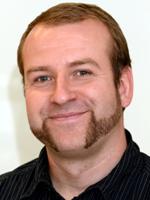
Dr. Benjamin Sames |



|
University of Vienna Department for Geodynamics and Sedimentology Geozentrum, Althanstrasse 14 1090 Vienna AUSTRIA UZA II, Room 3B 385A Phone: +43 (0) 1 4277 - 53479 E-Mail: benjamin.sames(at)univie.ac.at Department Website: http://geologie.univie.ac.at/en/sedimentology/scientific-staff/benjamin-sames/ This site: http://homepage.univie.ac.at/benjamin.sames/ |
|
Further Affiliations § Affiliated Research Associate (Vert. Pal.) Sam Noble Oklahoma Museum of Natural History (SNOMNH) 2401 Chautauqua Ave. Norman, OK 73072-7029, USA http://samnoblemuseum.ou.edu/staff/benjamin-sames-2/ § Stratigraphic Consultant Petrobras (Petróleo Brasileiro S.A.) |
|
News Wagreich, M., Hart, M.B., Sames, B., Yilmaz, I.O. (Eds.), 2020. Cretaceous Climate Events and Short-Term Sea-Level Changes. Geological Society of London, Special Publication, 498. Sames, B. et al., 2020. Aquifer-eustasy as the main driver of short-term sea-level fluctuations during Cretaceous hothouse climate phases. OPEN ACCESS, https://doi.org/10.1144/SP498-2019-105 |

|
Research Summary My research focuses on micropalaeontology of late Mesozoic (Late Jurassic - Early Cretaceous) non-marine deposits. Central aspects of my research are the taxonomy, phylogeny, palaeobiology and biostratigraphical application of ostracods (microcrustaceans of around 1mm size with a calcified bivalved shell, the carapace => Download little ostracod movie). Furthermore, I am interested in palaeoclimatology, particularly in climate-mode shifts, short-term climate changes, ocean-land interactions, and applications of these, such as marine to non-marine stratigraphic correlations. |